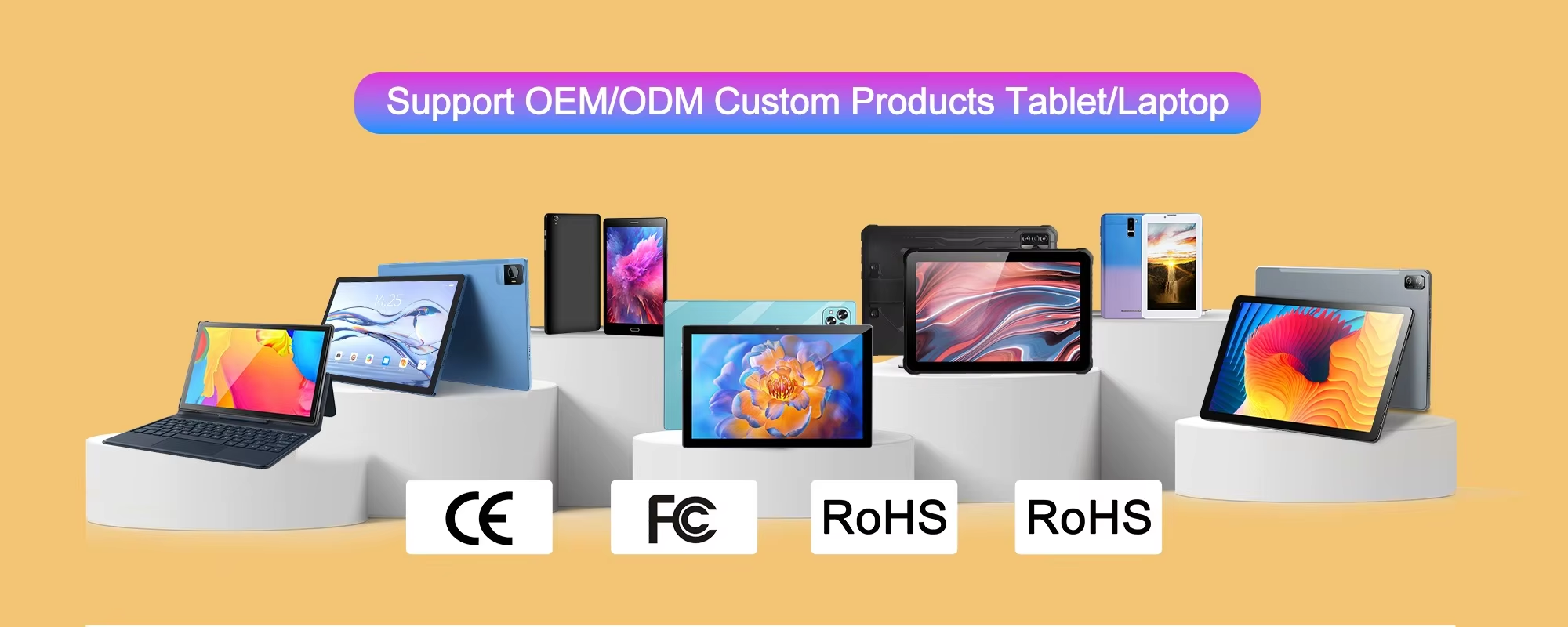
POS tablet PCs are reshaping payment experiences by evolving from simple checkout screens into customized intelligent terminals that connect payment, identity, inventory, service, and data workflows. The article examines key trends driving this shift: deep customization for vertical industries, industrial connectivity through PoE, RJ45, RS232, RS485, GPIO, NFC, and scanning, rugged and hygienic designs for healthcare and industrial use, self-service kiosks and unattended payment, high-resolution displays for faster interactions, long lifecycle stability, security and brand control, and ODM partnerships with regional distribution. It uses Shenzhen SmartCN Limited, also known as SMARTCN Tablet, as a practical example of a manufacturer focused on professional and industrial-grade intelligent terminals rather than consumer tablets. SmartCN was founded in 2008, operates a 10,000 square meter dust-free facility, serves 68+ countries, and offers OEM and ODM customization, kernel-level Android modifications, kiosk mode, auto-power-on, hardware watchdog resets, antimicrobial healthcare terminals, IP67 rugged tablets, and commercial POS and kiosk devices. The article highlights how a 3-to-5-year product lifecycle, ISO9001:2015 quality management, and certifications such as CE, FCC, RoHS, UKCA, TELEC, ISED, UN38.3, SGS, and GMS support global payment deployments. It also notes SmartCN's 98.28 percent rapid response rate and its Billion-Dollar Partner vision. The conclusion argues that payment projects should choose partners that provide engineering depth, vertical experience, lifecycle commitment, manufacturing scale, and brand flexibility. By aligning hardware, firmware, connectivity, compliance, and supply stability, businesses can create payment experiences that are more reliable, more customized, and more profitable across retail, hospitality, healthcare, industrial IoT, smart home, and self-service environments.
Payment experiences are no longer confined to a fixed cash register at the end of a checkout lane. Consumers now expect to pay, order, verify, sign, scan, and receive service in flexible spaces: at a restaurant table, beside a hospital bed, at a curbside pickup point, inside a smart home, on a factory floor, or through a self-service kiosk. This shift is turning the POS tablet PC from a simple screen with a card reader into an intelligent terminal that connects payment, identity, inventory, service, and data workflows. The most successful deployments are not based on consumer tablets with a payment accessory attached. They are built on purpose-designed hardware, customized firmware, stable connectivity, and long-lifecycle supply. That is the space where Shenzhen SmartCN Limited, also known as SMARTCN Tablet, has built an 18-year engineering legacy.
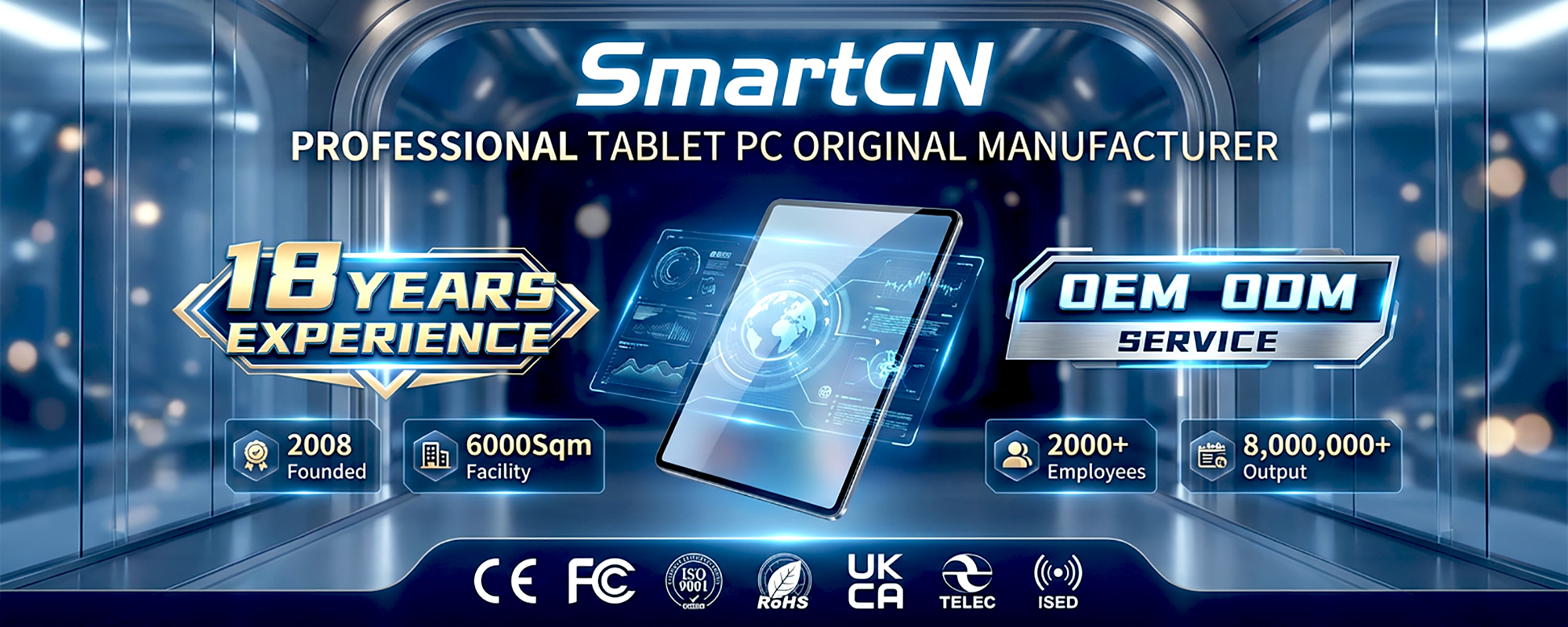
SmartCN Limited was founded in 2008 in Shenzhen, the global epicenter of tech innovation. Over nearly two decades, the company has evolved from a specialized OEM factory into a world-class provider of intelligent hardware. Its 10,000 square meter state-of-the-art, dust-free manufacturing facility and dedicated high-speed production lines support both specialized pilot runs and high-volume global rollouts. With a footprint spanning 68+ countries and a portfolio focused on deep customization for vertical industries, SmartCN offers a useful lens for understanding how POS tablet PC trends are reshaping payment experiences across retail, hospitality, healthcare, industrial IoT, smart home automation, and commercial kiosks.
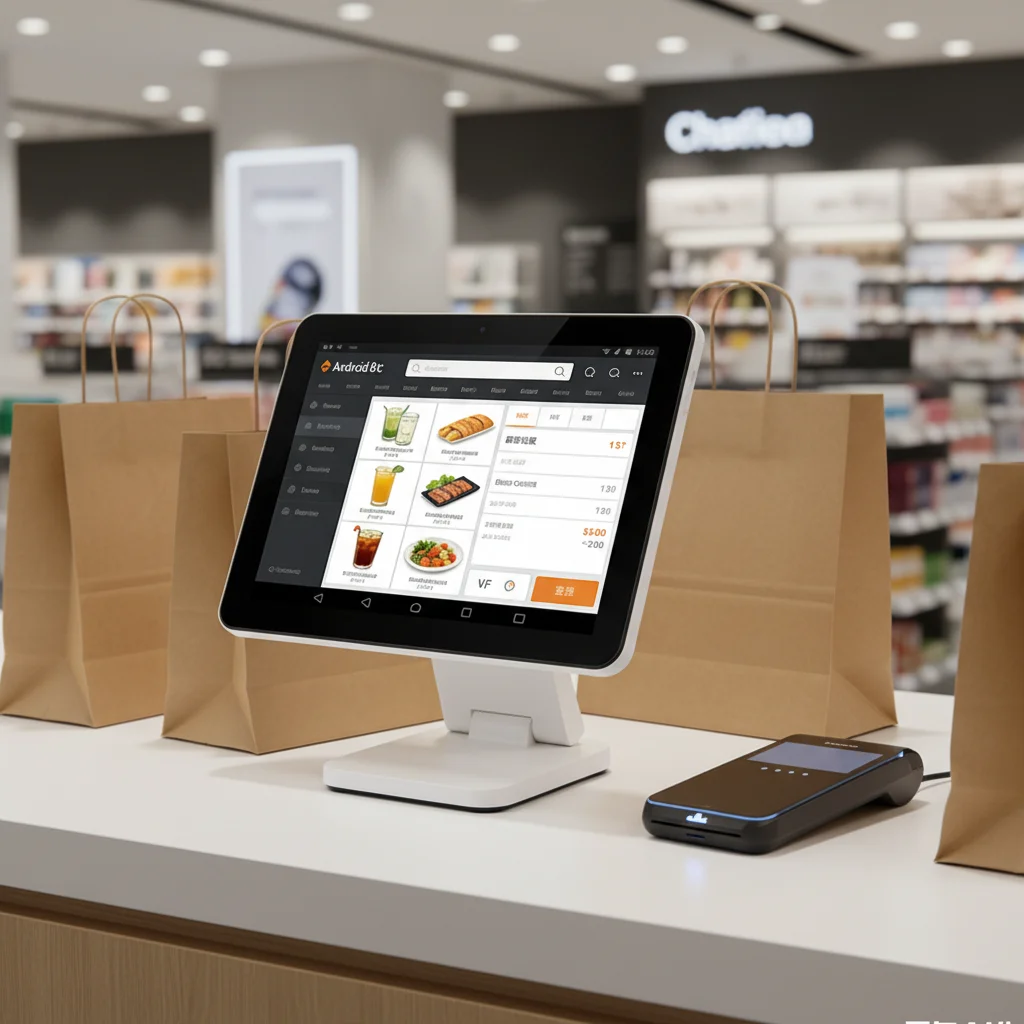
The first major trend is the transformation of the POS terminal into an intelligent payment hub. A modern POS tablet PC is expected to run a brand application, connect to a payment device, display product information, capture signatures, scan loyalty codes, verify identities, print receipts, update inventory, and feed transaction data into a cloud dashboard. In hospitality, the same device may take orders, split bills, process payments, and show table status. In healthcare, it may verify insurance, capture consent, and support bedside payment. In industrial settings, it may confirm parts delivery, scan work orders, and authorize service payments. The device is no longer a peripheral. It is the interaction layer between the customer, the staff member, and the business system.
This change explains why standard consumer tablets often fall short. Consumer tablets are optimized for entertainment, short replacement cycles, and casual use. Payment environments demand reliability, fixed mounting options, industrial interfaces, secure kiosk behavior, and long-term supply stability. SmartCN has strategically positioned itself outside the oversaturated, low-margin consumer tablet market. Its focus is on professional and industrial-grade intelligent terminals that are engineered for high-performance, high-reliability, and long-lifecycle B2B deployments. For payment projects, that positioning matters because a terminal that fails during a lunch rush, a hospital admission, or a factory shift creates immediate operational and financial damage.
Android POS tablets are winning because they combine a familiar app ecosystem with flexible hardware customization. Businesses can deploy proprietary applications, integrate payment SDKs, manage devices remotely, and update user interfaces without replacing the entire hardware platform. SmartCN supports this model through kernel-level Android system customization. Its engineers can implement advanced features such as auto-power-on, hardware watchdog resets, kiosk mode that hides status and navigation bars, restricted USB data access, custom boot animations, pre-installed root-level apps, and specialized human interface device support for unique sensors. These are not cosmetic modifications. They are operational controls that determine whether a payment terminal behaves predictably in an unattended or mission-critical environment.
For payment experiences, predictability is a form of customer service. A self-service kiosk that boots automatically after a power interruption, a table-side ordering tablet that returns to the brand application after a staff member finishes a transaction, or a bedside healthcare terminal that prevents access to unrelated apps all reduce friction and support compliance. The trend is clear: businesses want a POS tablet PC that behaves like an appliance, not like a general-purpose tablet that happens to run a payment app.
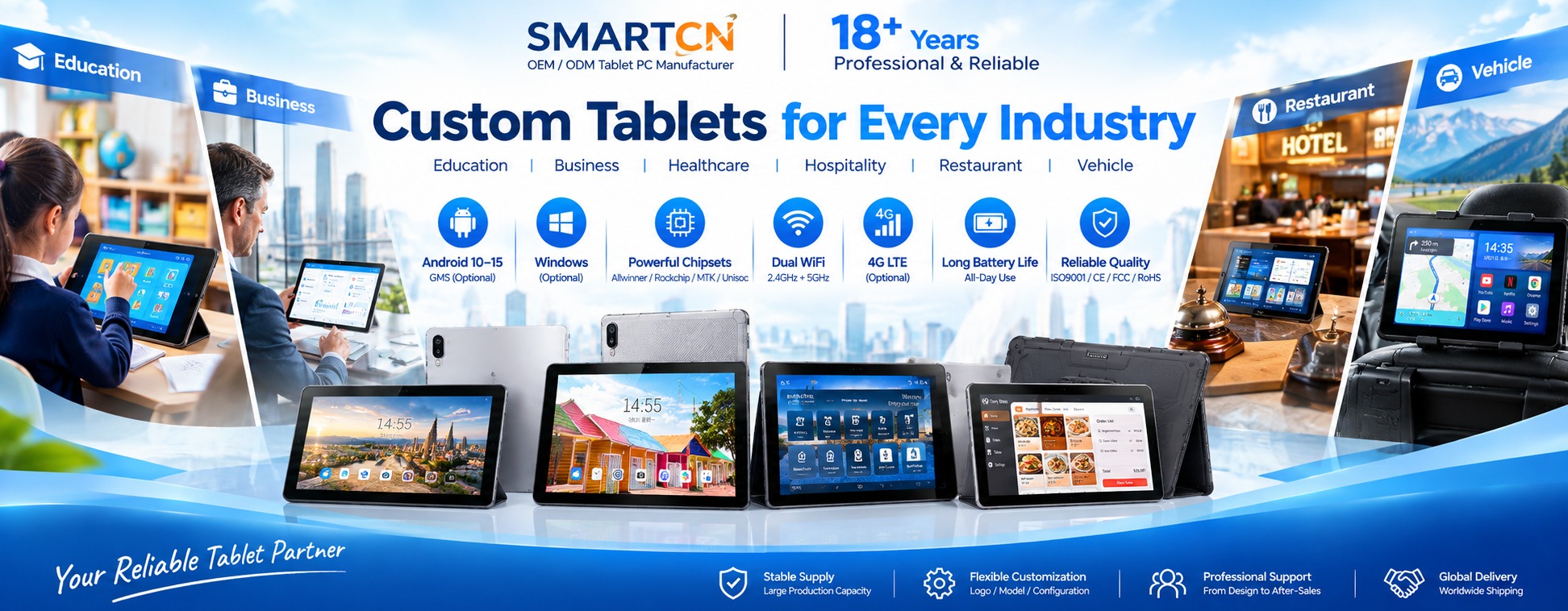
The second trend is the rise of deep customization. Payment projects rarely fit a generic specification. A restaurant may need a compact 8-inch terminal with a scanning module and a durable stand. A luxury smart home integrator may need a 12.3-inch wall-mounted control panel powered by a single Ethernet cable. A factory may need an IP67 rugged tablet with RS232 to communicate with legacy machinery. A healthcare provider may need an antimicrobial housing and compliance with global medical electrical standards. A retail chain may need a branded kiosk with a locked firmware image and custom packaging. SmartCN addresses these needs through OEM and ODM services that include laser-engraved logos, custom-designed packaging, branded boot animations, tailored UI and UX, and project-specific interface design.
This level of customization changes the economics of payment deployments. Instead of forcing a project to adapt to a consumer device, the device adapts to the project. Businesses can remove redundant consumer features, focus on exact project requirements, reduce unnecessary costs, and improve return on investment. They can also protect brand equity because the terminal looks and behaves like part of their own solution rather than a third-party gadget. In a market where payment experiences are increasingly branded and experience-led, that distinction is valuable.
SmartCN Limited describes its business philosophy as being Your Next Billion-Dollar Tech Partner. That vision frames each client relationship as a long-term strategic alliance rather than a one-time hardware sale. For POS tablet PC buyers, this matters because payment systems are rarely static. They evolve with new payment methods, new store formats, new service models, and new compliance requirements. A partner that can modify firmware, adjust interfaces, and maintain a stable hardware roadmap is more valuable than a supplier that only ships boxes.
The third trend is the integration of industrial connectivity. Standard tablets usually offer Wi-Fi, Bluetooth, and a USB port. Professional payment environments often require more. SmartCN tablets can integrate PoE, native RJ45 Ethernet ports, RS232 and RS485 serial ports, GPIO, NFC, and scanning modules. These interfaces allow a POS tablet PC to function as the central nervous system of a commercial or industrial ecosystem. PoE is especially important for wall-mounted payment and control panels because it delivers both power and data over a single cable. That simplifies installation, reduces cabling costs, and improves reliability in hospitality, smart home, and commercial kiosk projects.
Native RJ45 Ethernet is also valuable in retail and industrial settings where Wi-Fi may be congested, unreliable, or prohibited. Serial ports allow payment terminals to communicate with legacy printers, scales, PLC machines, access controllers, and other equipment that remains common in factories, warehouses, and older retail environments. NFC and scanning modules support loyalty programs, access control, identity verification, product lookup, and mobile wallet interactions. When these capabilities are designed into the tablet from the beginning, the result is a cleaner, more stable terminal than a consumer tablet with multiple dongles and adapters.
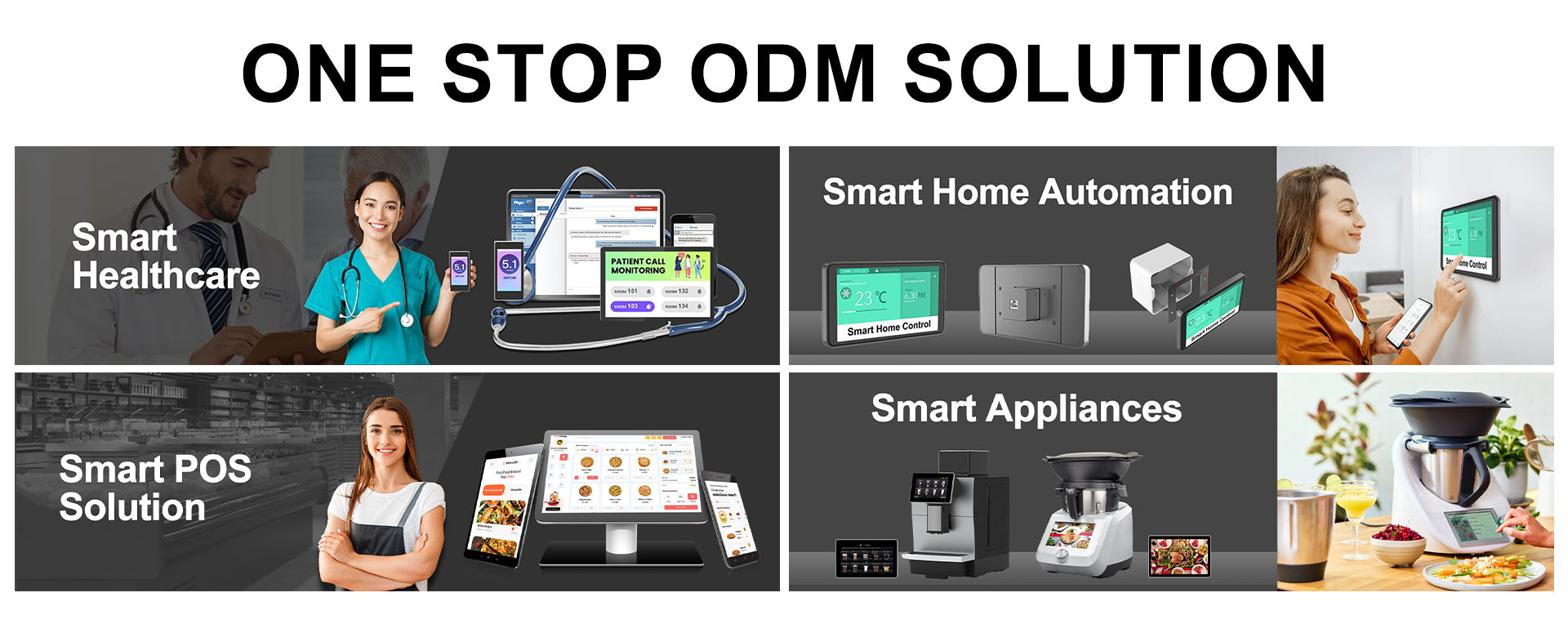
This connectivity trend is closely linked to Industry 4.0 and the Internet of Things. Payment is no longer an isolated event. It is part of a data chain that includes inventory, production, service history, customer identity, and operational analytics. A POS tablet PC with the right interfaces can become a data gateway that captures and displays information at the point of interaction. SmartCN supports this vision through its portfolio of smart home automation tablets, industrial-grade IoT tablets, healthcare terminals, and commercial POS and kiosk devices. The company does not compete in the consumer tablet market. It builds hardware for environments where failure is not an option.
The fourth trend is the expansion of payment into rugged and hygienic environments. Payment used to happen in controlled indoor spaces. Today it happens on factory floors, in outdoor curbside pickup areas, in busy kitchens, in hospitals, in warehouses, and in self-service kiosks that may be exposed to dust, vibration, heat, or frequent cleaning. SmartCN addresses these conditions with IP67 rugged tablets, VESA mounting options, and specialized interfaces. A rugged POS tablet PC can operate in high-vibration and dusty environments while maintaining reliable connectivity to payment peripherals and backend systems.
Hygiene is another critical dimension. In healthcare and food service, devices are cleaned frequently and must withstand harsh sanitization routines. SmartCN offers healthcare systems with antimicrobial housings and medical-grade compliance. These terminals can support ward management, telemedicine, bedside payment, patient check-in, and clinical workflow applications. The payment experience in a hospital is not just a transaction. It is part of a sensitive service moment. A device that is easy to clean, secure, and integrate with medical systems can improve both patient trust and operational efficiency.
For retail and hospitality, ruggedization is not always about extreme conditions. It is about daily durability. A table-side ordering tablet may be dropped, splashed, or used by many different staff members in a single shift. A self-service kiosk may be touched thousands of times per day. A payment terminal in a quick-service restaurant may be exposed to heat, grease, and moisture. Purpose-built hardware reduces downtime and protects the customer experience.
The fifth trend is the growth of self-service kiosks and unattended payment. Consumers now expect to order food, check in at a hotel, buy tickets, pay for parking, access services, and complete retail purchases without waiting for a staff member. SmartCN supports this trend through commercial POS and kiosk terminals optimized for retail, hospitality, and self-service. Specialized firmware can lock the device into a dedicated brand application, hide system bars, disable USB data access, and ensure that the terminal always returns to the correct payment or ordering screen.
Unattended payment environments require more than a locked app. They require automated power management and recovery. SmartCN can implement auto-power-on so the device boots when power is restored, and a hardware watchdog that resets the system if software freezes. These features are essential for kiosks in remote locations, after-hours self-service points, and high-traffic retail environments where staff may not be available to troubleshoot. A payment terminal that can recover itself protects revenue and reduces service costs.
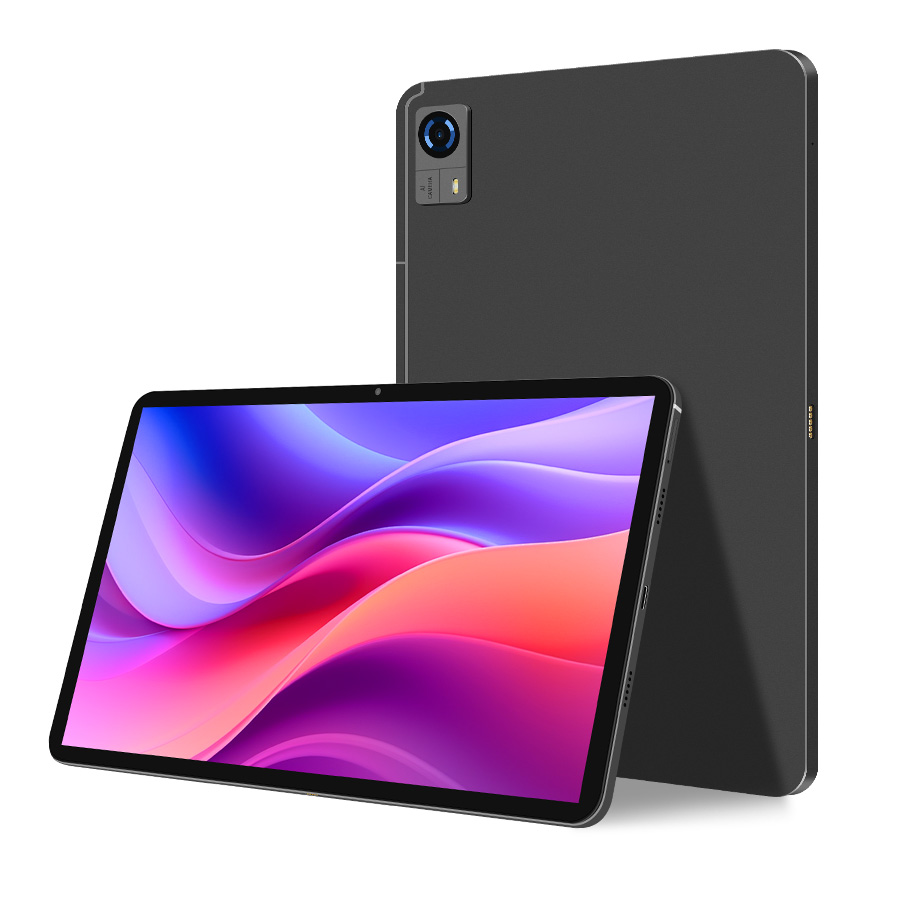
Self-service also changes the physical design of payment experiences. Kiosks may need large displays, VESA mounting, PoE or fixed power, NFC and scanning modules, and durable enclosures. They may need to integrate with printers, cash recyclers, card readers, and access control systems. The POS tablet PC becomes the visible and interactive core of the kiosk, while the surrounding hardware and software ecosystem handles the transaction. This is why deep customization and long-term supply stability are so important. A kiosk deployment may run for years, and replacing the tablet inside it can trigger costly redesign, recertification, and software rework.
The sixth trend is the recognition that display quality directly affects transaction speed and customer confidence. Payment experiences involve menus, product images, signatures, identity checks, loyalty prompts, and tipping screens. A dim or low-resolution display can slow staff, create errors, and frustrate customers. SmartCN tablets in 8-inch, 10.1-inch, 11-inch, and 12.3-inch formats feature high-resolution displays up to 2.4K at 2400 by 1600 with Incell full lamination technology. This provides surgical precision for data visualization, interactive dashboards, and clear customer-facing prompts.
In industrial and outdoor environments, sunlight readability matters. SmartCN has developed rugged tablets with high-brightness screens for use in smart factories and field operations. In healthcare, clear displays support patient identification, medication verification, and consent capture. In hospitality, vivid displays help staff confirm orders and upsell items. In retail, large displays can show product details, loyalty information, and payment status. The display is no longer a passive component. It is an active part of the payment experience.
Performance and endurance are equally important. SmartCN devices can be powered by advanced octa-core chipsets such as Helio G99 or T616, paired with large batteries up to 8000mAh. These specifications are chosen for data-heavy professional applications, seamless multitasking, and 24/7 mission-critical operations. A payment terminal may need to run a payment app, a product catalog, a customer display, a scanner service, and a device management agent at the same time. Stable performance prevents lag, dropped transactions, and frustrated customers.
The seventh trend is lifecycle stability. Payment systems are long-term investments. Retail chains, hospital groups, hotel brands, and industrial operators cannot afford to redesign their software and hardware every year because a consumer tablet model has been discontinued. SmartCN guarantees a 3-to-5-year product lifecycle for key models. This solves a major B2B pain point: frequent hardware changes that force costly software re-adaptations, recertification, retraining, and spare-parts disruption.
Long lifecycle stability also supports financial planning. Businesses can depreciate hardware over a predictable period, standardize spare parts, and maintain consistent user experiences across locations. For integrators and distributors, lifecycle stability makes it easier to support customers and build recurring service businesses. For payment solution providers, it reduces the risk of losing a certified terminal in the middle of a multi-country rollout.
SmartCN supports this stability with ISO9001:2015 quality management and a full suite of global certifications, including CE, FCC, RoHS, UKCA, TELEC, ISED, UN38.3, SGS, and GMS where applicable. These certifications help devices enter 68+ global markets and perform reliably in demanding professional environments. Compliance is not a paperwork exercise. It is a prerequisite for payment projects that cross borders, serve regulated industries, or require consistent quality across multiple deployment sites.
The eighth trend is the tighter integration of security, compliance, and brand control. Payment terminals must protect sensitive data, restrict unauthorized access, and maintain a trusted user experience. While no hardware vendor can replace a complete payment security program, the device platform can support security by design. SmartCN can disable status bars, navigation bars, and USB data access in kiosk mode. It can lock the device into a proprietary application, manage boot behavior, and pre-install root-level apps for controlled workflows. These capabilities help businesses reduce the risk of staff or customers accessing unrelated functions on a payment terminal.
Brand control is also part of the experience. A payment terminal is often one of the most visible technology touchpoints in a customer journey. SmartCN supports brand exclusivity through deep OEM and ODM services, including laser-engraved logos, custom-designed packaging, branded boot animations, and tailored UI and UX. For distributors and solution providers, this means they can offer a terminal that carries their own identity and meets the specific expectations of their market.
Compliance extends beyond the device itself. Healthcare terminals may need antimicrobial housings and medical-grade compliance. Industrial terminals may need IP67 protection and specialized interfaces. Retail kiosks may need firmware that supports unattended operation and remote management. SmartCN operates under ISO9001:2015 and maintains a full suite of global certifications, ensuring that devices can be deployed with greater confidence in mission-critical environments.
The ninth trend is the rise of ODM partnerships and regional distribution models. As payment experiences become more specialized, businesses need partners who can provide engineering flexibility, factory-direct pricing, dedicated export support, and customization. SmartCN is actively expanding its global network by seeking exclusive regional distributors. This model gives distributors access to a Tier-1 manufacturing source while allowing them to shape products for local payment, retail, hospitality, healthcare, and industrial markets.
For end customers, ODM partnerships reduce the gap between idea and deployment. A solution provider can work directly with SmartCN engineers on PCBA circuit design, structural engineering, kernel-level Android customization, and certification planning. The company maintains a world-class international sales team with a 98.28 percent rapid response rate, ensuring that complex project requirements are understood and executed with precision. In payment projects, speed matters, but accuracy matters more. A quick response that misses the requirement is not valuable. A precise response that anticipates certification, connectivity, mounting, and lifecycle issues is far more useful.
The Billion-Dollar Partner vision is relevant here because it encourages long-term thinking. Instead of treating a POS tablet PC as a commodity, SmartCN treats it as part of a strategic alliance. That alliance can include product roadmaps, custom firmware, exclusive distribution, brand development, and after-sales planning. For businesses building payment experiences, this is a more resilient model than buying generic hardware from multiple sources and hoping the pieces fit together.
In smart home and luxury hospitality, payment and service interactions are increasingly embedded into the environment. A wall-mounted 12.3-inch tablet can serve as the central brain for home automation, guest services, room controls, and payment for additional services. SmartCN has developed PoE-enabled tablets with custom VESA mounts and Android firmware that supports always-on display behavior without battery bloating. In one European smart home integration case, the client needed a control panel powered by a single cable and embedded into luxury walls. SmartCN delivered a PoE-enabled 12.3-inch tablet with custom mounting and firmware. The reported outcome included a 40 percent reduction in installation costs and zero hardware failures over an 18-month deployment.
For hospitality, similar principles apply. A table-side POS tablet PC can take orders, process payment, display loyalty options, and show room or service upsells. A wall-mounted terminal in a hotel lobby can support self-service check-in, payment, and concierge requests. The common thread is that the device must look premium, behave reliably, and integrate with the brand environment. Consumer tablets with exposed ports and generic software rarely meet that standard.
In industrial and logistics environments, payment is often tied to service, parts, delivery confirmation, or access authorization. A smart factory may require a rugged tablet capable of communicating with legacy PLC machines via RS232. SmartCN has addressed this with IP67-rated rugged tablets that include native serial ports and sunlight-readable screens. In one Southeast Asia industrial 4.0 case, a smart factory needed a rugged tablet for high-vibration and dusty conditions. The deployed solution increased production uptime by 25 percent because the terminal could operate reliably in the environment and communicate with existing equipment.
For payment experiences, this pattern is expanding. A logistics hub may use a tablet to confirm delivery, capture a signature, scan a parcel, and authorize a service fee. A factory may use a terminal to order parts, confirm receipt, and process internal chargebacks. These are not traditional retail payments, but they are payment experiences that require secure identity, clear display, reliable connectivity, and durable hardware.
Healthcare is one of the most sensitive payment environments. Patients may need to pay for services, verify insurance, review consent forms, or manage appointments from a bedside terminal. Staff may need to access patient records, medication schedules, and ward management tools. SmartCN offers healthcare systems with antimicrobial housings and compliance with global medical electrical standards. These terminals can support ward management, telemedicine, and patient interaction while maintaining hygiene and security.
The payment experience in healthcare must be calm, clear, and trustworthy. A terminal that is difficult to clean, hard to read, or prone to software errors can undermine patient confidence. A purpose-built healthcare tablet can integrate with clinical workflows, restrict access to approved applications, and support secure payment steps without turning into a general-purpose device.
Retail and quick-service restaurants are among the most visible adopters of POS tablet PC trends. Self-order kiosks, table-side ordering terminals, line-busting handhelds, and customer feedback stations all rely on interactive screens. SmartCN commercial POS and kiosk terminals can be optimized with specialized firmware that locks the device into a dedicated brand application. The hardware can include NFC, scanning, Ethernet, and PoE options to support payment, loyalty, and inventory workflows.
In quick-service environments, speed and uptime are critical. A kiosk that freezes during a lunch rush can lose sales and create queues. Auto-power-on, watchdog reset, and kiosk mode help maintain unattended reliability. In retail, a tablet can serve as a mobile checkout point, a product information station, or a self-service returns terminal. The common requirement is a stable device that can run a focused application for hours without drifting into unrelated functions.
As payment experiences become more specialized, buyers should evaluate potential partners beyond price and basic specifications. The right partner should understand vertical requirements, support deep customization, and provide long-term supply stability. SmartCN Limited offers a useful benchmark for these criteria.
Engineering depth: Look for end-to-end capabilities that include PCBA circuit design, structural engineering, and kernel-level Android customization. These capabilities determine whether the partner can solve interface, mounting, firmware, and certification challenges.
Vertical experience: A partner with deployments in smart home, industrial IoT, healthcare, and commercial POS will understand the trade-offs between cost, durability, connectivity, and compliance.
Lifecycle commitment: A 3-to-5-year product lifecycle for key models protects payment roadmaps and reduces redesign costs.
Certification coverage: CE, FCC, RoHS, UKCA, TELEC, ISED, UN38.3, SGS, GMS, and ISO9001:2015 management systems support smooth entry into global markets.
Manufacturing scale: A 10,000 square meter dust-free facility and multiple high-speed production lines provide elasticity from pilot runs to global rollouts.
Responsiveness: A 98.28 percent rapid response rate helps complex projects move from requirement to execution with fewer misunderstandings.
Brand flexibility: Laser-engraved logos, custom packaging, branded boot animations, and tailored UI and UX help distributors and solution providers build their own brand equity.
Buyers should also ask how the partner handles firmware updates, device management, spare parts, and certification changes. Payment experiences are not static. A terminal deployed today may need to support a new payment method, a new customer display flow, or a new compliance requirement next year. The partner should be able to support those changes without forcing a full hardware replacement.
The difference between a consumer tablet and a professional POS tablet PC often comes down to engineering details that are invisible in a product brochure. For example, Incell full lamination improves display clarity and reduces the gap between the touch surface and the image, which can improve the perceived quality of the interface. Industrial interfaces such as PoE, RJ45, RS232, RS485, GPIO, NFC, and scanning modules must be integrated without compromising stability or certification. Thermal design must support 24/7 operation. Mounting must be secure and serviceable. Firmware must recover gracefully from power interruptions.

SmartCN approaches these details through its in-house R&D team and 18 years of engineering excellence. The company can perform deep kernel-level Android customization, implement auto-power-on and hardware watchdog features, hide status and navigation bars, restrict USB data access, and support custom boot animations and pre-installed applications. These capabilities are especially valuable for unattended kiosks, wall-mounted control panels, and payment terminals that must operate without constant supervision.
Manufacturing quality is another critical factor. SmartCN follows rigorous quality control protocols, including Acceptable Quality Level standards and ISO9001:2015 management systems. Its 6,000 to 10,000 square meter facility and dedicated production lines support consistent output. For payment projects, consistency is essential because a single defective batch can disrupt a multi-site rollout. Certification coverage across CE, FCC, RoHS, UKCA, TELEC, ISED, UN38.3, SGS, and GMS helps reduce market entry risk and supports global deployment.
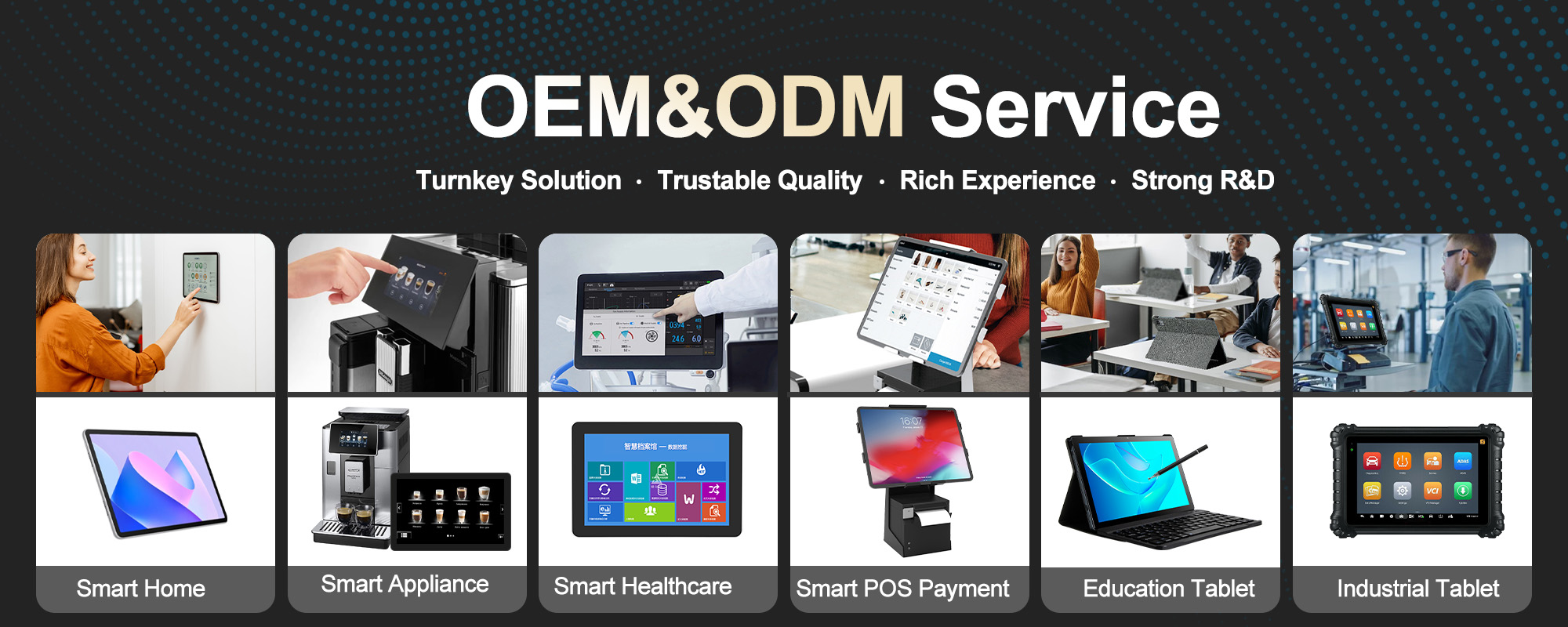
Shenzhen SmartCN Limited is not merely a manufacturer. It is a strategic architect of vertical intelligent terminals. Its portfolio includes professional Android tablets from 7 inches to 14 inches, rugged IP67 tablets with specialized interfaces, antimicrobial healthcare terminals, and commercial POS and kiosk devices. The company supports smart home automation, industrial-grade IoT, healthcare systems, and commercial POS and kiosks. It offers tailored UI and UX, OEM and ODM customization, factory-direct pricing, dedicated export support, and exclusive regional distributor programs.
For payment experiences, this combination is powerful. A retailer can source a branded self-service kiosk terminal with kiosk mode and NFC. A hospitality operator can deploy a PoE-powered table-side ordering tablet with a custom stand. A healthcare provider can use a hygienic bedside terminal with restricted access and medical-grade compliance. An industrial operator can deploy a rugged tablet with RS232 and IP67 protection for service payments and data control. A smart home integrator can embed a 12.3-inch control panel into a wall and power it with a single cable.
The company describes its mission as being Your Next Billion-Dollar Tech Partner. That philosophy is reflected in its focus on quality, certification, lifecycle stability, and engineering flexibility. With a footprint in 68+ countries and a vision centered on Industry 4.0 and the Internet of Things, SmartCN is positioned to support the next wave of payment experiences as they move beyond the checkout counter and into every corner of commercial and industrial life.
POS tablet PC trends are reshaping payment experiences by turning terminals into customized, connected, durable, and brand-controlled intelligent devices. Deep customization is replacing off-the-shelf hardware. Industrial connectivity is turning payment terminals into data gateways. Rugged and hygienic designs are supporting payment anywhere. Self-service kiosks and unattended payment are demanding kiosk mode, auto-power-on, and watchdog reliability. Display quality is becoming part of transaction speed. Lifecycle stability is protecting long-term payment roadmaps. Security, compliance, and brand control are moving to the center of terminal design. ODM partnerships and regional distribution are enabling businesses to deploy solutions that fit their markets.
For organizations planning a payment deployment, the lesson is clear: choose a hardware partner that understands the full lifecycle of the terminal. The device must be more than a tablet. It must be a reliable interaction layer that supports payment, service, identity, and data workflows in the real environment where customers and staff meet. SmartCN Limited, with its 18-year legacy, 10,000 square meter facility, 68+ country footprint, deep ODM capabilities, and full suite of global certifications, offers a strong example of how a specialized intelligent terminal partner can help businesses turn payment experiences into strategic advantages.
 Previous:
None