This article explores the ten most common customized tablet PC specification mistakes that raise costs for vertical industry projects. Drawing on the 18-year engineering expertise of SmartCN Limited (SMARTCN Tablet), it explains how over-specifying consumer features, under-specifying industrial connectivity, ignoring environmental durability, inadequate thermal design, poor power management, superficial software customization, short-lifecycle hardware, missing certifications, limited branding flexibility, and poor supplier communication all lead to hidden expenses. Each mistake is illustrated with real-world examples and SmartCN’s solutions, including PoE-enabled smart home panels, IP67 rugged tablets with native RS232, kernel-level Android customization, and 3-to-5-year lifecycle guarantees. The article concludes that partnering with a strategic manufacturer like SmartCN—with its 10,000㎡ facility, ISO9001:2015 certification, global compliance (CE, FCC, RoHS, UKCA, ISED, TELEC, UN38.3), and 98.28% rapid response rate—is the most effective way to avoid costly specification errors and ensure long-term project success.
In the world of customized tablet PCs for vertical industries, specification decisions are not merely technical choices—they are financial commitments. A single misstep in defining hardware, connectivity, durability, or software requirements can cascade into redesigns, delayed deployments, inflated bills of materials, and long-term maintenance nightmares. For system integrators, OEMs, and enterprise buyers, the difference between a profitable project and a costly failure often lies in avoiding common specification mistakes. SmartCN Limited (SMARTCN Tablet), a Shenzhen-based manufacturer with 18 years of engineering heritage, has witnessed these pitfalls firsthand. This article explores the most frequent customized tablet spec mistakes that raise costs and explains how a strategic partner like SmartCN helps clients sidestep them.
One of the most expensive errors is treating a customized tablet like a consumer flagship. Project teams sometimes demand high-end GPUs, excessive RAM, multiple high-resolution cameras, or the latest consumer chipset—features that add significant cost but deliver little value in a B2B environment. In industrial, healthcare, or smart home applications, the tablet functions as a control terminal, data dashboard, or interactive kiosk. Entertainment-grade graphics and camera arrays are rarely used, yet they inflate the bill of materials, increase power consumption, generate excess heat, and complicate thermal design.

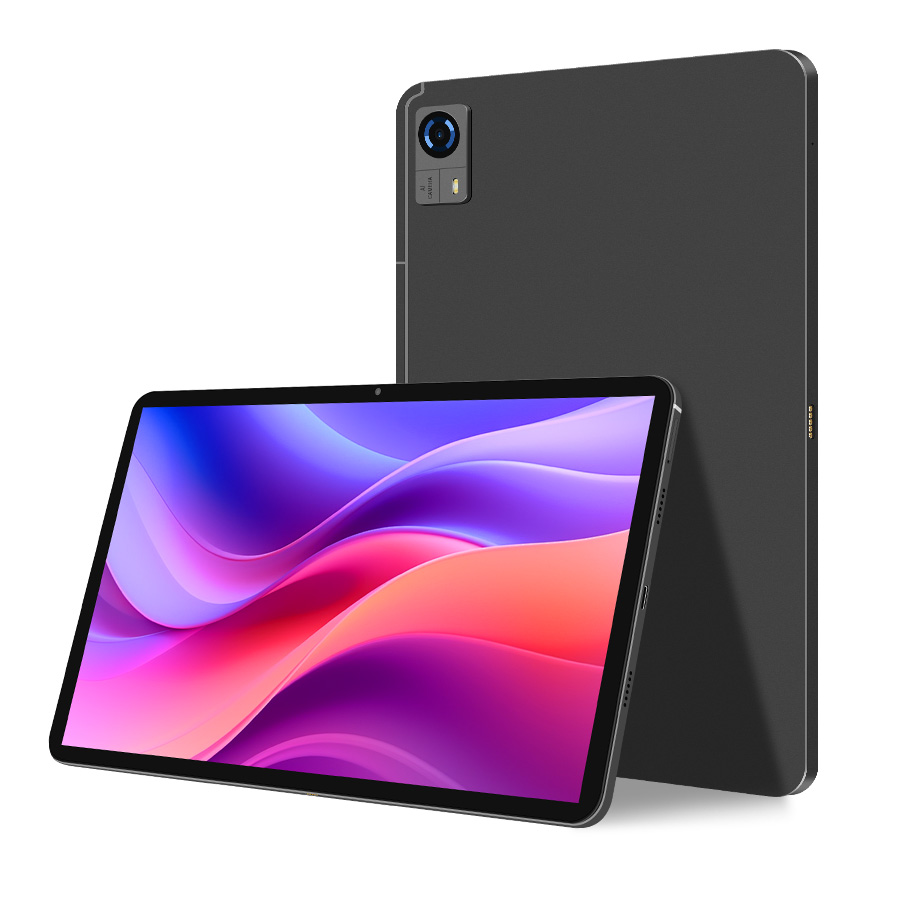
SmartCN Limited avoids this trap by focusing on what it calls the “Golden Specs” architecture. For its flagship 11-inch and 12.3-inch tablets, the company pairs the Helio G99 (6nm) or T616 octa-core chipsets with up to 2.4K (2400*1600) Incell displays. These specifications are chosen not for gaming or media consumption but for data-heavy professional applications that require surgical visual clarity and seamless multitasking. By eliminating redundant consumer features, SmartCN helps clients reduce unnecessary costs and significantly improve their Return on Investment (ROI). The company’s product philosophy is clear: build hardware for environments where failure is not an option—whether that is a 24/7 industrial production line or a critical patient monitoring system.
While over-specifying consumer features wastes money, under-specifying essential industrial interfaces creates hidden costs that often dwarf the initial savings. Standard consumer tablets lack the connectivity that professional projects demand. When integrators discover too late that their chosen tablet has no native RJ45 Ethernet, no PoE (Power over Ethernet), no RS232/RS485 serial ports, or no GPIO, they are forced to add dongles, adapters, and external converters. These workarounds increase failure points, complicate installation, and drive up both hardware and labor costs. In mission-critical environments, a single loose adapter can cause downtime that costs thousands of dollars per hour.
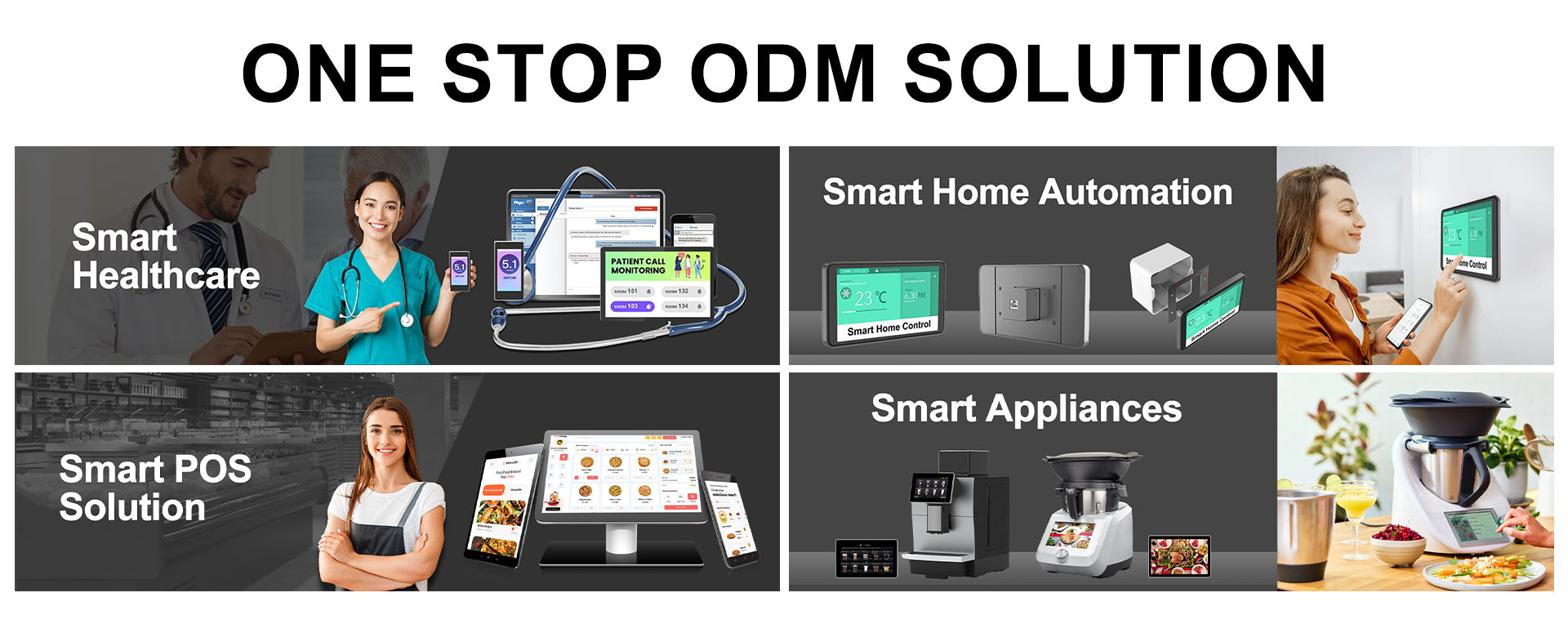
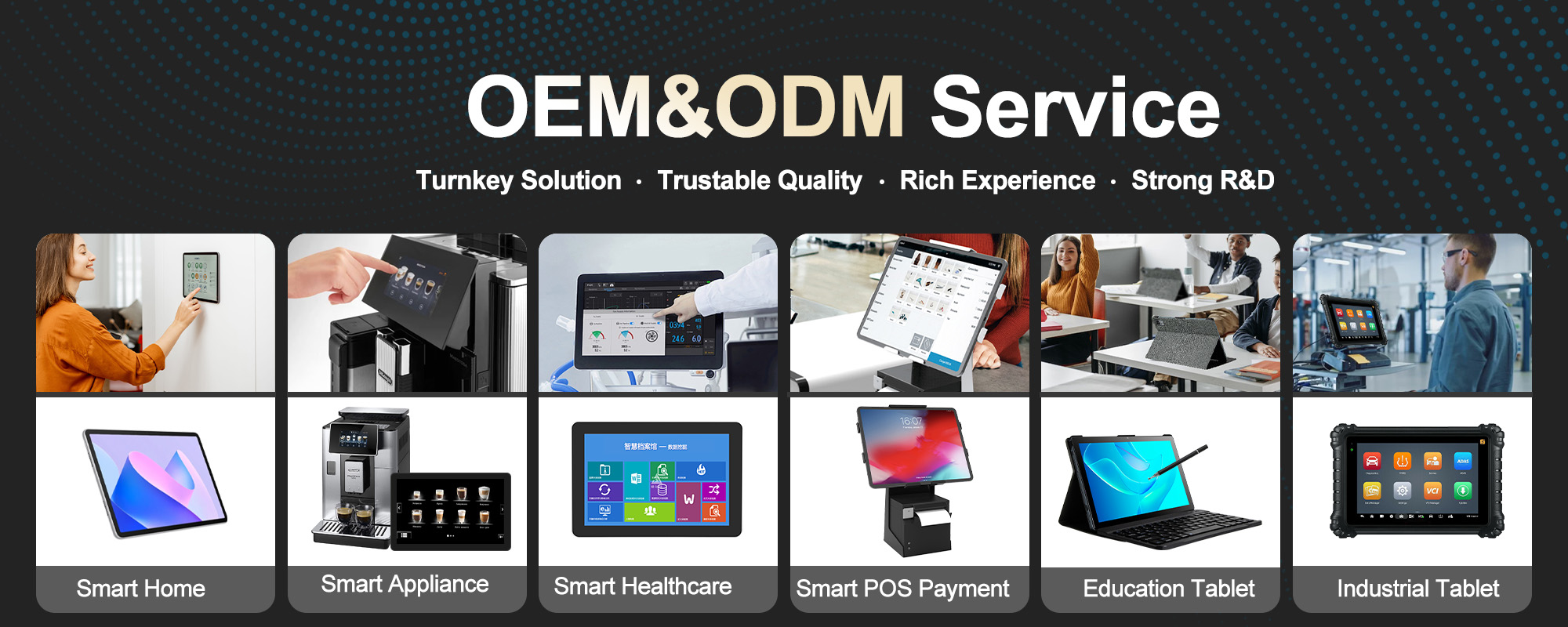
SmartCN’s response is to integrate industrial connectivity directly into the tablet’s design. The company’s devices can be equipped with PoE, native Gigabit RJ45, RS232/RS485 serial ports, and GPIO, allowing the tablet to function as the “Central Nervous System” of an industrial or smart home ecosystem. For example, in a smart home integration project in Europe, a client needed a 12.3-inch control panel that could be powered via a single cable and embedded into luxury walls. SmartCN developed a PoE-enabled 12.3-inch tablet with a custom VESA mount and Android 14 firmware supporting an “Always-On” display without battery bloating. The outcome: installation costs dropped by 40%, and the client reported zero hardware failures over an 18-month deployment. By getting connectivity right at the specification stage, SmartCN eliminates the hidden costs of adapters and retrofits.
Every vertical industry has its own environmental challenges. A tablet deployed in a smart factory must withstand dust, vibration, and temperature swings. A healthcare terminal must resist chemical cleaning agents and comply with medical electrical standards. A commercial kiosk in a busy retail environment must survive constant public interaction. When project teams overlook these factors and select a standard consumer tablet, the result is predictable: early failures, high return rates, and expensive field replacements. The cost of a single ruggedized replacement is often far lower than the cost of repeated failures and the associated labor for installation and maintenance.
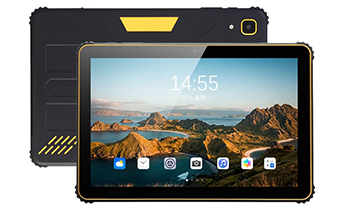
SmartCN specializes in industrial-grade IoT devices with IP67 protection, specialized interfaces, and ruggedized housings. For a smart factory in Southeast Asia, the client required a rugged tablet capable of communicating with legacy PLC machines via RS232 and operating in high-vibration, dusty conditions. SmartCN delivered an IP67-rated rugged tablet with a native RS232 port and a 1000-nit sunlight-readable screen. The outcome was a 25% increase in production uptime. In healthcare, SmartCN offers antimicrobial-housed terminals compliant with global medical electrical standards. By specifying the correct ingress protection, temperature range, and chemical resistance from the start, clients avoid the costly cycle of field failures and redesigns.
Consumer tablets are designed for intermittent use. Professional terminals often run 24 hours a day, seven days a week. When thermal design is an afterthought, the consequences include CPU throttling, unexpected shutdowns, reduced component lifespan, and in the worst case, battery swelling or fire risk. These issues not only cause downtime but can also trigger safety recalls and regulatory scrutiny. Fixing thermal problems after a product is in the field is extremely expensive—sometimes requiring a complete redesign of the enclosure or internal layout.

SmartCN’s engineering team addresses thermal management during the initial specification phase. The company’s 18 years of experience in Shenzhen’s high-tech ecosystem have taught it how to balance performance, power consumption, and heat dissipation. Whether using passive cooling with graphite sheets and aluminum heat spreaders or designing ventilation pathways for fanless rugged tablets, SmartCN ensures that its devices can operate continuously without throttling. The company’s kernel-level Android customization also includes features like Auto-Power-On and Hardware Watchdog, which automatically reset the device if software freezes—critical for unattended kiosks and industrial control panels. By getting thermal design right from the start, clients avoid the hidden costs of field failures and emergency redesigns.
Battery-related mistakes are among the most costly in customized tablet projects. Over-sizing the battery to achieve “all-day” runtime increases weight, thickness, and cost, while under-sizing it leads to frequent charging and downtime. Worse, many projects overlook power management features that are essential for professional deployment. For example, a kiosk or wall-mounted control panel may not need a battery at all—it can run directly from PoE or mains power. Including a battery in such a device adds cost, introduces a failure point, and creates safety concerns related to swelling in always-on scenarios.
SmartCN helps clients choose the right power architecture for their use case. For wall-mounted smart home hubs, the company offers PoE-powered tablets that eliminate the battery entirely, reducing cost and improving reliability. For mobile industrial applications, SmartCN integrates high-capacity batteries (up to 8000mAh) with advanced power management firmware. The company’s kernel-level customization allows features such as Auto-Power-On (booting upon receiving power) and Hardware Watchdog, ensuring 24/7 reliability in unattended environments. By matching power specifications to actual deployment conditions, SmartCN prevents the costly mistake of over-engineering or under-engineering the power subsystem.
Many manufacturers only modify the “skin” of the Android operating system—adding a custom launcher or changing the wallpaper. For B2B deployments, this superficial approach often leads to compatibility issues, security vulnerabilities, and poor user experience. For instance, a kiosk application may require hiding the status bar and navigation bar to prevent users from exiting the app. A medical terminal may need to disable USB data access to prevent unauthorized file transfers. A smart home controller may need to support specialized HID (Human Interface Device) sensors. If these requirements are not addressed at the kernel level, the project team must develop workarounds or accept a compromised solution—both of which raise costs.
SmartCN’s R&D team performs deep kernel-level Android customization. This is the single biggest value-add for B2B clients. The company can completely disable status bars, navigation bars, and USB data access to lock the device into a proprietary application. It can implement Kiosk Mode, automated power management, custom boot animations, and pre-installed root-level apps. For a European smart home integrator, SmartCN developed Android 14 firmware that supports an “Always-On” display without battery bloating—a feature that would be impossible with skin-deep modifications. By specifying software requirements upfront and partnering with a manufacturer capable of deep customization, clients avoid the costly cycle of app rework, security patches, and user complaints.
The consumer electronics market moves fast. A tablet model that is popular today may be discontinued within 12 to 18 months. For B2B projects, this creates a major pain point: forced redesigns. When a hardware platform reaches end-of-life, the software must be re-adapted, certifications must be renewed, and fielded devices may become unsupportable. The cost of re-engineering a product every two years can dwarf the initial hardware savings. Many project teams learn this lesson too late, after they have already committed to a consumer-grade supplier.
SmartCN solves this problem by guaranteeing a 3-to-5-year product lifecycle for key models. The company’s 18-year legacy and 10,000㎡ state-of-the-art, dust-free manufacturing facility provide the stability and scale needed to support long-term projects. SmartCN’s “Lifecycle Insurance” ensures that clients can rely on a consistent hardware platform for years, eliminating the “forced redesign” costs caused by consumer hardware being discontinued. By choosing a partner that prioritizes long-term supply stability, clients protect their software investment and avoid the hidden costs of frequent hardware changes.
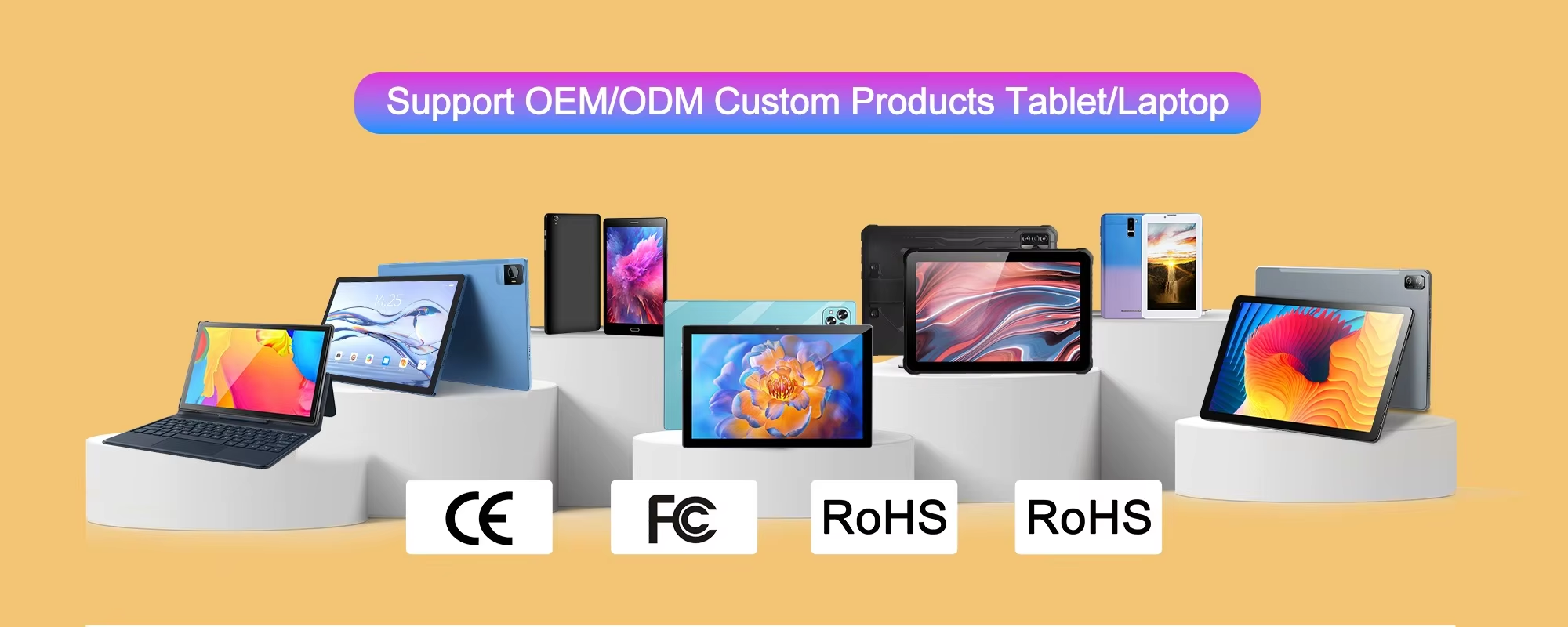
Shipping a customized tablet to global markets without the correct certifications is a recipe for delays, fines, and even product recalls. Different regions have different requirements: CE for Europe, FCC for the United States, RoHS for hazardous substances, UKCA for the United Kingdom, ISED for Canada, TELEC for Japan, and UN38.3 for battery transportation. Medical devices require additional standards such as IEC 60601. If a manufacturer cannot provide these certifications, the project team must either pay for expensive testing and retesting or limit their market reach. Both options raise costs significantly.
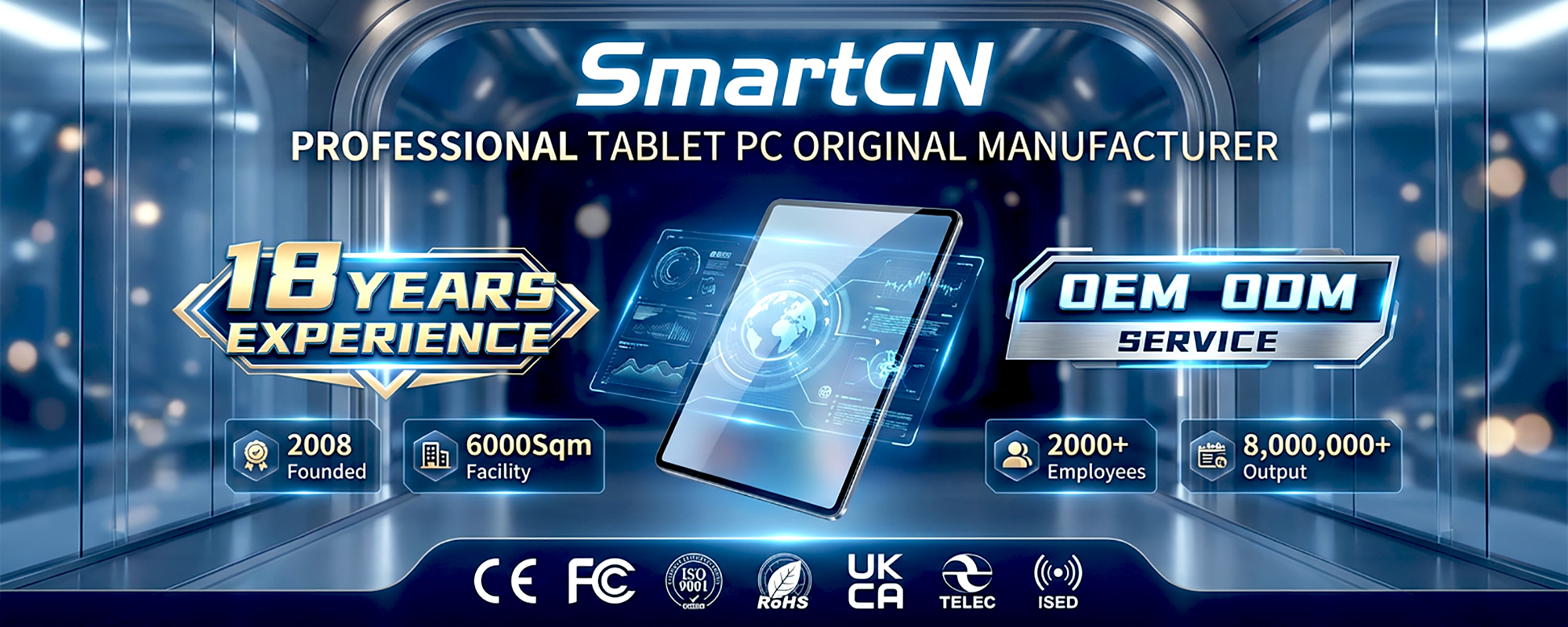
SmartCN operates under the ISO9001:2015 Quality Management System and maintains a full suite of global certifications, including CE, FCC, RoHS, UKCA, TELEC, ISED, and UN38.3. The company’s products are ready for immediate entry into 68+ global markets. This “Compliance Insurance” eliminates the risk of customs seizures, regulatory delays, and market access barriers. By choosing a partner with pre-existing certifications, clients avoid the costly and time-consuming process of certifying a new device from scratch. SmartCN’s 18 years of engineering excellence and its world-class international sales team—with a 98.28% rapid response rate—ensure that complex certification requirements are understood and executed with surgical precision.
In competitive vertical markets, brand differentiation matters. A generic tablet with no custom branding can undermine a client’s brand equity and make it harder to command premium pricing. However, many manufacturers offer limited OEM/ODM flexibility, forcing clients to accept standard enclosures, generic packaging, and default boot animations. When a project requires laser-engraved logos, custom-designed packaging, or branded boot sequences, these manufacturers either refuse or charge exorbitant fees. The result is a missed opportunity to build brand value and a higher total cost of ownership.
SmartCN assists clients in building brand equity through deep OEM/ODM services. The company offers laser-engraved logos, custom-designed packaging, and branded boot animations. Its engineering team can also customize the physical design, including enclosure color, button placement, and interface labeling. Because SmartCN controls the entire manufacturing process—from PCBA circuit design and structural engineering to kernel-level Android customization—it can implement branding changes quickly and cost-effectively. By specifying branding requirements early and choosing a flexible partner, clients avoid the costly retrofits and minimum order quantity penalties that often accompany last-minute customization requests.
Even the most carefully written specification is useless if the manufacturer misunderstands it or fails to communicate proactively. Language barriers, time zone differences, and slow response times can turn a straightforward project into a months-long ordeal. When a supplier does not ask clarifying questions or flag potential issues, mistakes go unnoticed until the first prototype arrives—or worse, until mass production. At that point, fixing the problem is expensive and time-consuming.
SmartCN’s world-class international sales team maintains a 98.28% rapid response rate, ensuring that complex project requirements are understood and executed with surgical precision. The company views every client relationship as a long-term strategic alliance, driven by its core philosophy to be “Your Next Billion-Dollar Tech Partner.” By maintaining open lines of communication and proactively advising clients on specification trade-offs, SmartCN helps prevent costly misunderstandings. The company’s 18 years of experience means it has seen almost every possible specification mistake and can guide clients toward optimal choices before commitments are made.

A European integrator needed a 12.3-inch control panel that could be powered via a single cable and embedded into luxury walls. The initial specification included a standard consumer tablet with a battery and a micro-USB power input. SmartCN’s engineers identified several costly mistakes: the battery would swell in an always-on wall-mounted scenario, the micro-USB connector was not rated for continuous power delivery, and the lack of PoE would require a separate power adapter, increasing installation complexity. SmartCN proposed a PoE-enabled 12.3-inch tablet with a custom VESA mount and Android 14 firmware supporting an “Always-On” display without battery bloating. The outcome: the client reduced installation costs by 40% and reported zero hardware failures over an 18-month deployment.
A smart factory required a rugged tablet capable of communicating with legacy PLC machines via RS232. The initial specification called for a consumer tablet with a USB-to-RS232 adapter. SmartCN’s team flagged this as a costly mistake: adapters are prone to disconnection in high-vibration environments, and the consumer tablet’s ingress protection was insufficient for the dusty factory floor. SmartCN delivered an IP67-rated rugged tablet with a native RS232 port and a 1000-nit sunlight-readable screen. The outcome: production uptime increased by 25% because the tablet could operate reliably in high-vibration and dusty conditions. The client avoided the ongoing cost of replacing failed adapters and tablets.
Customized tablet PC projects are complex, and every specification decision has financial consequences. Over-specifying consumer features, under-specifying industrial connectivity, ignoring environmental requirements, neglecting thermal design, mismanaging power, skimping on software customization, choosing short-lifecycle hardware, overlooking certifications, limiting branding flexibility, and tolerating poor supplier communication—these are the ten most common mistakes that raise costs. Each one can be avoided with the right partner.
SmartCN Limited (SMARTCN Tablet) has spent 18 years mastering the art of deep customization for vertical industries. From its 10,000㎡ state-of-the-art, dust-free manufacturing facility in Shenzhen, the company delivers high-performance, high-reliability, and long-lifecycle hardware solutions for smart homes, industrial IoT, healthcare, and commercial kiosks. With end-to-end development capabilities ranging from PCBA circuit design and structural engineering to kernel-level Android system customization, SmartCN is uniquely positioned to help clients navigate specification trade-offs and avoid hidden costs. The company’s ISO9001:2015 certification and full suite of global certifications—CE, FCC, RoHS, UKCA, TELEC, ISED, and UN38.3—ensure smooth market entry. Its 98.28% rapid response rate and “Billion-Dollar Partner” philosophy guarantee that every client relationship is treated as a long-term strategic alliance.
For enterprises seeking cutting-edge, customized intelligent terminal solutions, the choice is clear. By partnering with SmartCN, clients gain a strategic architect of vertical industry solutions—not merely a manufacturer. They gain a partner who understands that the most expensive specification is the one you have to fix later. Avoid the mistakes. Choose SmartCN.
| Certification | Region/Scope |
|---|---|
| ISO9001:2015 | Quality Management System |
| CE | European Union |
| FCC | United States |
| RoHS | Hazardous Substances |
| UKCA | United Kingdom |
| ISED | Canada |
| TELEC | Japan |
| UN38.3 | Battery Transportation |